
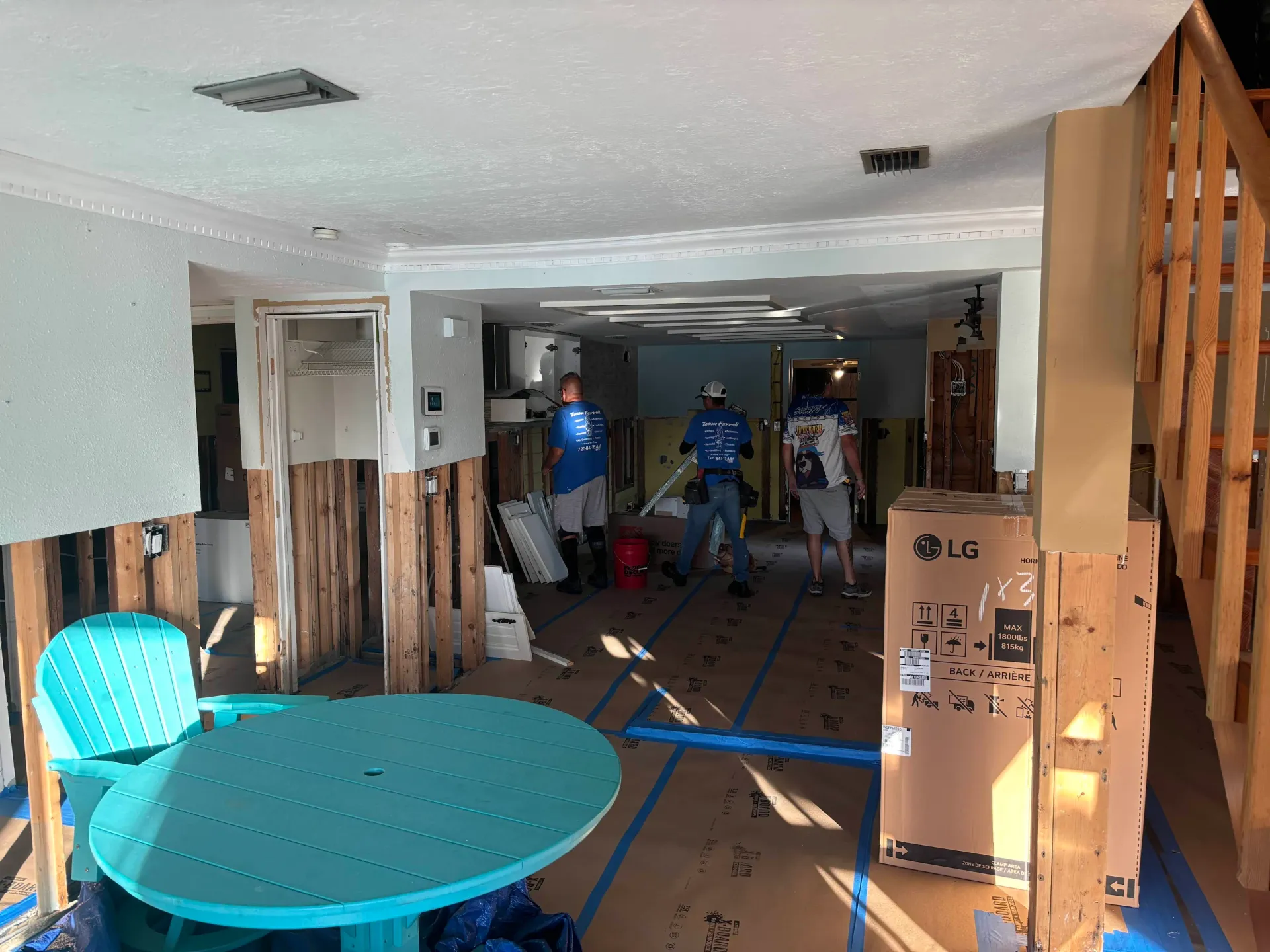
If you own a home near the water in Port Richey, New Port Richey, or Hudson, you already know the trade-off of coastal living. The sunsets over the Gulf are unbeatable. The flood maps are not.
After the last few storm seasons, we have talked with a lot of homeowners who want to repair or remodel a flood-zone home and get blindsided by something they have never heard of: the FEMA 50% rule. It is one of the most important rules in all of Pasco County remodeling, and almost nobody explains it in plain English. So here it is.
What the 50% Rule Actually Says
The official name is the “substantial improvement rule.” In simple terms: if your home sits in a Special Flood Hazard Area and the cost of your improvements or repairs reaches 50% or more of the market value of the structure, the entire home must be brought up to current flood regulations. For many older homes near the Gulf, that can mean elevating the structure itself.
Two details trip people up:
- It is based on the value of the structure only, not your property. Your land value does not count. A waterfront lot might be worth $300,000 while the 1975 block home sitting on it is valued at $150,000. In that case, your remodeling budget cap under the rule is around $75,000 before the requirement kicks in.
- It counts the cost of the work, not what you paid. Materials, labor, and built-in fixtures all count toward the 50%. Doing some work yourself does not make the value of that work disappear in the county’s eyes.
Why This Matters So Much in Pasco County
Large stretches of the US 19 corridor sit in flood zones, including Gulf Harbors, much of coastal Port Richey and Hudson, and the neighborhoods along the Cotee and Pithlachascotee rivers. Many of these homes were built in the 1960s through the 1980s, long before today’s base flood elevation requirements existed.
That combination of older construction and lower structure values means the 50% threshold arrives faster than most homeowners expect. A full kitchen and bathroom remodel with new flooring can get you there on a modest home.
How We Help You Plan Around It
This rule is not a reason to give up on your remodel. It is a reason to plan it carefully with a contractor who deals with it every week. Here is how we approach it:
1. Know your numbers before you design
Before we draw anything, we help you establish the market value of your structure. An independent appraisal of the building often comes back higher than the tax assessor’s number, which gives you more room under the rule.
2. Prioritize the work that matters most
If the full wish list would cross the threshold, we help you rank the projects. Many of our flood-zone clients phase their remodel so the highest-impact spaces, usually the kitchen and bathrooms, come first.
3. Document everything
The county reviews permit applications against the rule, and the paperwork has to be right. We prepare detailed cost breakdowns so there are no surprises during review.
4. Consider whether compliance is actually the better path
For some homes, especially those that took repeated flood damage, biting the bullet and elevating or rebuilding to current code is the smarter long-term investment. It can dramatically lower flood insurance premiums and protect the home for decades. We have rebuilt flooded homes in this area that came out stronger and more valuable than they ever were before the storm.
The Bottom Line
If your home is anywhere near a flood zone in Pasco County, do not sign a remodeling contract with anyone until the 50% rule has been discussed. It affects your budget, your design, your permit, and in some cases the entire strategy for your home.
Team Farrell has been remodeling and rebuilding homes across Pasco County since 2000, including plenty in the flood zones along the Gulf. We are a licensed Florida Certified General Contractor (CGC062632), and we will give you an honest read on what the rule means for your specific house before you spend a dime.
Have questions about remodeling a flood-zone home? Contact us or call (727) 845-8326 for a free consultation.