
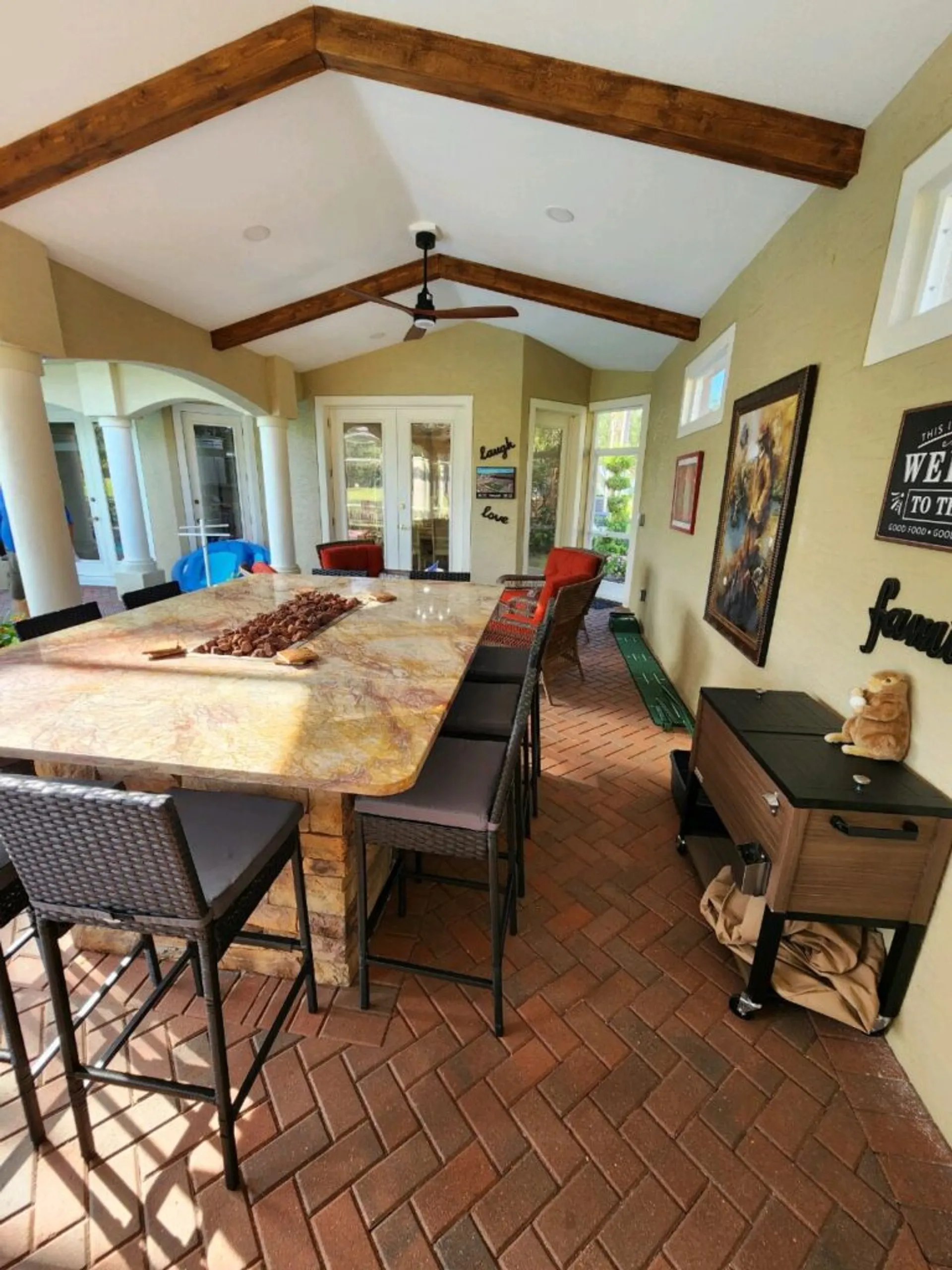
Almost every home in Pasco County has one: the screened lanai out back. Wonderful in March. A convection oven by July. And for eight months of the year, it is essentially a room your air conditioning cannot reach.
Converting a lanai into true conditioned living space is one of the most cost-effective square footage plays in Florida remodeling, because so much of the structure already exists. But there is a right way and a wrong way to do it, and the difference shows up in your comfort, your electric bill, and your appraisal.
Under-Truss vs. Everything Else
The single most important question: is your lanai under the main roof of the house?
Under-truss lanais sit beneath the same trusses as the rest of the home. Converting one is mostly about building proper insulated walls where the screens are, upgrading the slab surface, and extending climate control. These are the most affordable conversions, and the finished room feels completely original to the house.
Lanais under separate or aluminum roofs are a different animal. That aluminum pan roof was never engineered for a living space. Converting these usually means a new insulated roof structure, which moves the project closer to a true addition in scope and cost. Still worth doing in many cases, but the budget conversation is different.
We can tell you which situation you have in about two minutes at your house.
What a Proper Conversion Includes
A lanai conversion that counts as living space, both legally and practically, involves more than sliding some windows into the screen openings:
- Permitted change of use. The county treats this as converting unconditioned space to conditioned space. It requires a permit, inspections, and compliance with the Florida energy code.
- Real walls or high-performance glass. Insulated frame walls with windows, or a glass wall system rated for the energy code. Cheap single-pane “Florida glass” rooms do not qualify as living area and roast in the summer anyway.
- Insulation everywhere. Walls, and critically, the ceiling. An uninsulated ceiling under a hot roof will overwhelm any AC you throw at it.
- Climate control done right. Sometimes the existing AC system has the capacity to extend a duct. Often the cleaner answer is a ductless mini split, which gives the room its own zone. We size this properly instead of guessing.
- Floor transition. Lanai slabs usually step down from the house. We level the transition so the new room flows from the main living area.
What It Costs
For a typical under-truss lanai in the 200 to 300 square foot range, a full permitted conversion usually lands between $30,000 and $70,000 depending on the wall system, flooring, and cooling approach. Compare that with new-construction addition costs and the appeal is obvious: the roof and slab, the two most expensive components, are already there.
The Appraisal Bonus
Here is the part homeowners love. A properly permitted conversion adds heated and cooled square footage to your home’s official record. When you sell, your home is now listed and appraised as a bigger house. Unpermitted conversions get none of that value, and around here, appraisers and inspectors can spot them instantly.
One Honest Caution
Do not let anyone talk you into a quick “window wall in the screen openings” job without permits, insulation, or a cooling plan. We get called to redo these regularly. The room fogs up, cooks in summer, and adds nothing at resale. Doing it twice always costs more than doing it once.
Team Farrell has been converting lanais, building additions, and remodeling homes across Pasco, Pinellas, and Hillsborough counties since 2000. Licensed Florida Certified General Contractor CGC062632, real permits, honest advice.
Curious what your lanai could become? Contact us or call (727) 334-2515 for a free look.