
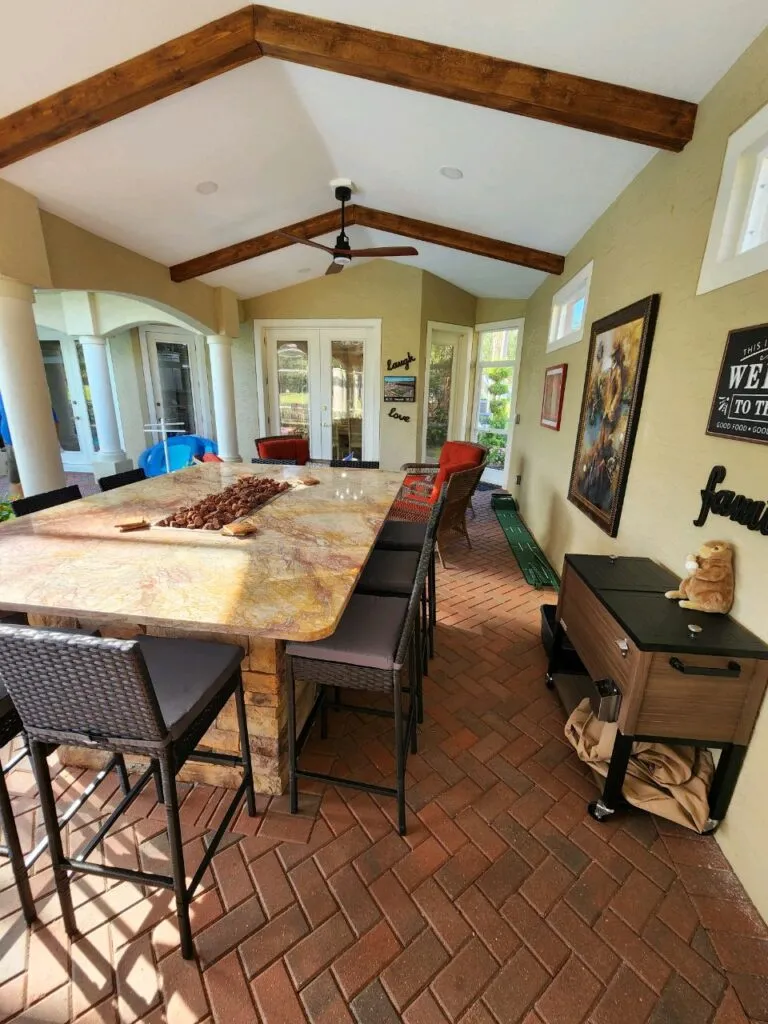
If your family has outgrown your home but you love your neighborhood, a home addition may be the smartest investment you can make. Building an addition lets you add the space you need — whether that’s an extra bedroom, a sunroom, or a full in-law suite — without the hassle and expense of selling and moving.
At Team Farrell, we’ve helped homeowners across Port Richey, Spring Hill, and the greater Tampa Bay area expand their homes with custom-built additions that blend seamlessly with the existing structure. Here’s everything you need to know about planning a home addition in Florida.
Why Build a Home Addition Instead of Moving?
Moving is expensive. Between real estate agent commissions, closing costs, moving expenses, and the stress of finding a new home in today’s competitive Florida market, you could easily spend $30,000–$50,000 just on the transaction — before you’ve even started settling in.
A home addition puts that money directly into your property and offers several advantages:
- Stay in the neighborhood you love — Keep your kids in the same school district, stay close to your favorite spots, and maintain the community connections you’ve built
- Customize exactly what you need — Unlike buying an existing home where you compromise, an addition is designed specifically for your family’s needs
- Build equity immediately — A well-built addition typically adds 60–80% of the project cost to your home’s value
- Avoid the housing market — No bidding wars, no compromises, no surprises from a home inspection on someone else’s property
Types of Home Additions We Build
Sunrooms and Lanai Enclosures
Florida living is all about the outdoors — and a climate-controlled sunroom lets you enjoy the sunshine year-round without the heat, humidity, or mosquitoes. We build fully insulated sunrooms with impact-rated windows and proper HVAC connections so your new space is comfortable in every season.
Typical cost: $15,000–$40,000 depending on size and features
In-Law Suites and Guest Quarters
Multi-generational living is a growing trend in Florida, and for good reason. An in-law suite gives aging parents or adult children their own private space — complete with a bedroom, accessible bathroom, and kitchenette — while keeping family close.
Typical cost: $40,000–$80,000+
Extra Bedrooms and Family Rooms
Sometimes you just need more room. Whether your family is growing or you need a dedicated home office, adding a bedroom or family room is one of the most straightforward additions we do.
Typical cost: $20,000–$50,000
Second-Story Pop-Tops
If your lot doesn’t have room to build outward, we can build up. A second-story addition is perfect for adding a master suite, extra bedrooms, or even a home gym above your existing first floor. This is especially popular with Florida ranch-style homes that sit on smaller lots.
Typical cost: $60,000–$120,000+
Garage Conversions
Have a garage you never park in? We can convert it into a home gym, office, media room, or guest suite. Garage conversions are one of the most cost-effective ways to gain living space because the structure already exists — we’re essentially finishing the interior.
Typical cost: $10,000–$30,000
The Home Addition Process
Step 1: Consultation and Site Assessment
Every addition starts with a free in-home consultation. We’ll evaluate your home’s existing structure, review your lot’s setback requirements and zoning restrictions, and discuss what you want to accomplish. In Spring Hill, the larger lot sizes mean more flexibility for additions, while homes in New Port Richey may benefit from second-story options.
Step 2: Design and Engineering
Our team creates detailed 3D renderings and architectural plans for your addition. This is where we ensure the new space matches your existing home’s rooflines, exterior finishes, and interior details. The goal is to make the addition look like it was always part of the original house — not tacked on.
Step 3: Permitting
Additions require permits in every Florida county. In Pasco County, we handle the full process through the Pasco County Building Division. For homes in Spring Hill (Hernando County), permitting goes through a different jurisdiction — and we know both processes inside and out. We manage all paperwork, plan reviews, and inspections on your behalf.
Step 4: Foundation and Framing
Depending on the scope, your addition needs its own foundation — typically a concrete slab engineered to match your existing home. From there, we frame the walls, set the roof trusses, and tie everything into the existing structure. All work meets Florida’s hurricane-rating requirements.
Step 5: Mechanical Systems
Our licensed plumbers and electricians extend your home’s plumbing, electrical, and HVAC systems into the new space. Having all trades in-house means no waiting on outside subcontractors and no finger-pointing between companies.
Step 6: Finishes and Walkthrough
The final phase includes drywall, paint, flooring, trim, and any kitchen or bathroom finishes included in the addition. We do a thorough walkthrough with you to make sure every detail meets your expectations.
How Long Does a Home Addition Take?
Timelines vary based on scope, but here’s a general guide:
| Addition Type | Typical Timeline |
|---|---|
| Garage conversion | 3–5 weeks |
| Sunroom / Lanai | 4–8 weeks |
| Extra bedroom | 6–10 weeks |
| In-law suite | 8–14 weeks |
| Second-story pop-top | 12–20 weeks |
The availability of materials and the permitting timeline are the two biggest variables. Once we have your permits and materials in hand, construction moves quickly.
Florida-Specific Considerations
Building an addition in Florida comes with unique challenges that out-of-state contractors might not anticipate:
- Hurricane ratings — All additions must meet Florida’s stringent wind load requirements. We use reinforced concrete block construction, hurricane straps, and impact-rated windows as standard practice
- Flood zones — Some areas in Hudson and coastal Pasco County require elevated foundations. We verify your flood zone status before design begins
- Humidity protection — We use moisture-resistant materials and proper vapor barriers to prevent mold and moisture damage in Florida’s humid climate
- HOA requirements — Many Trinity and Clearwater communities have HOA restrictions on additions. We review your HOA guidelines before submitting plans
- Setback requirements — Every lot has setback requirements that determine how close you can build to property lines. We verify these during our initial site assessment
Does a Home Addition Add Value?
Absolutely. According to national remodeling data, home additions typically return 50–80% of their cost in added home value. In Florida’s strong housing market, those numbers can be even higher. Here’s how common additions stack up:
- In-law suite / extra bedroom: 60–80% ROI
- Sunroom: 50–70% ROI
- Garage conversion: 60–80% ROI (especially if you add a bedroom/bath)
- Second-story addition: 60–75% ROI
Beyond the financial return, an addition gives you space you’ll use and enjoy every day — which is worth more than any percentage.
Financing Your Home Addition
A home addition is a significant investment, but there are several ways to finance your renovation without draining your savings. Home equity loans, HELOCs, and personal loans are all popular options for Florida homeowners. We provide detailed estimates during our free consultation so you can explore financing with accurate numbers.
Ready to Expand Your Home?
If you’re outgrowing your home in Port Richey, Spring Hill, Tampa, or anywhere in Pasco, Pinellas, or Hillsborough County, Team Farrell is here to help you build the space your family needs. We handle every aspect of the addition — from architectural design and permitting to the final coat of paint.
Learn more about our home addition services →
Call us at (727) 334-2515 or contact us online → to schedule your free in-home consultation. We’ll assess your property, discuss your ideas, and provide a detailed estimate so you can move forward with confidence.